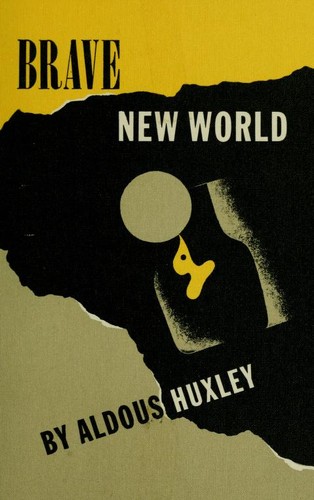
Everybody’s read this one, or been assigned it, or at least absorbed the phrase secondhand without knowing it’s a Shakespeare quote before it’s Huxley’s title. I got assigned it in high school like most people and remembered almost nothing except soma and the hatcheries, so I picked it back up as an adult with something close to a clean slate, and what struck me this time was not the parts I remembered.
The conditioning material in the early chapters, infants electrocuted for reaching toward books and flowers so they grow up unable to want the wrong things, is the part that’s stayed with me hardest, more than the pleasure-drug angle everyone quotes. It’s a colder argument than “distraction keeps people docile,” it’s that desire itself gets engineered before a person is old enough to know they had any say in it, and that’s a scarier proposition than most dystopias bother making. Huxley wrote an introduction decades after publication noting how many of his predictions had already come partly true faster than he expected, and reading that alongside the novel now, another several decades on, gives the whole thing an uncomfortable double vision, some details laughably dated and others landing closer than they should.
Where the book struggles, and where most modern critics seem to land too, is the Savage Reservation material and John’s arc in the back half, which reads today as a much blunter piece of writing than the world-building that precedes it, more a vehicle for Huxley’s argument than a character in his own right. I understand what the contrast is meant to do, but the execution feels thinner than everything that came before it, and the ending, while thematically clean, arrives faster than the setup earns. Four stars. Worth returning to as an adult specifically because the parts that actually hold up aren’t the ones assigned reading tends to emphasize.